World’s Easiest No-Knead Artisan Yeast Bread Recipe
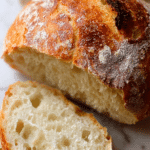
This artisan no-knead yeast bread recipe offers a simple, foolproof way to make crusty, homemade bread with minimal effort. Using just basic ingredients and a straightforward mixing process, this bread requires no kneading, a long rise, and baking in a hot Dutch oven to achieve a golden, crunchy crust and soft, airy interior. Perfect for beginners and experienced bakers alike, it delivers delicious, bakery-quality bread at home.
- Prep Time: 10 minutes
- Cook Time: 42 minutes
- Total Time: 2 hours 52 minutes (including rise time; longer if refrigerated overnight)
- Yield: 1 loaf (about 8 servings) 1x
- Category: Bread
- Method: Baking
- Cuisine: Artisan/Western
- Diet: Vegetarian
Ingredients
Scale
Dough
- 3 cups (450g) bread or plain/all-purpose flour
- 2 tsp instant or rapid rise yeast (see Note 2 for active dry yeast alternative)
- 1 1/2 tsp cooking salt or kosher salt (halve if using table salt)
- 1 1/2 cups (375 ml) very warm tap water (up to 55°C/130°F, not boiling)
For Dusting and Shaping
- 1 1/2 tbsp flour (for dusting: 1 tbsp for work surface, 1/2 tbsp for dough top)
Instructions
- Mix Dough: In a large bowl, combine the flour, yeast, and salt. Add the very warm water and mix thoroughly using the handle of a wooden spoon until all the flour is incorporated. The dough will be wet and sticky, not kneadable but not runny like cake batter. Adjust consistency with a little more water or flour if necessary.
- Rise: Cover the bowl with cling wrap or a plate and leave it at room temperature for 2 to 3 hours until the dough doubles in size, appears jiggly like jelly, and has bubbles on the surface. If after 1 hour there is no rise, move it to a warmer spot to encourage fermentation.
- Optional Refrigeration for Flavor: At this point, you can bake immediately or cover and refrigerate the dough for up to 3 days to develop additional flavor. If refrigerated, allow the dough to come to room temperature for 45 to 60 minutes before baking.
- Preheat the Oven and Dutch Oven: Place a Dutch oven with its lid (26cm/10″ or larger) inside your oven and preheat to 230°C (450°F) or 220°C fan (425°F) for 30 minutes before baking to ensure the pot is extremely hot.
- Shape Dough: Sprinkle your work surface with 1 tablespoon of flour. Use a dough scraper or similar tool to scrape the dough out of the bowl onto the floured surface. Sprinkle approximately 1/2 tablespoon of flour over the top of the dough.
- Fold the Dough: Fold the dough inward from the edges about 6 times to roughly form a round shape. This process deflates some of the bubbles while forming a shape sturdy enough to move. Do not over-handle; the shape does not need to be perfect.
- Transfer Dough onto Parchment Paper: Slide a sheet of parchment paper next to the dough, then flip the dough upside down onto the paper so the seam side is down and the smooth side is up. Push the dough toward the center of the paper and gently reshape it into a round form. Imperfections and lumps will result in more crunchy crust edges.
- Place Dough into Dutch Oven: Carefully remove the hot Dutch oven from the oven. Use the parchment paper to lift and place the dough into the pot, then cover with the lid.
- Bake: Bake the dough covered for 30 minutes, then remove the lid and bake uncovered for an additional 12 minutes or until the crust is deeply golden and crispy.
- Cool and Serve: Remove the bread from the Dutch oven and cool on a wire rack for at least 10 minutes before slicing to allow the crumb to set.
Notes
- Note 1: Either bread flour or plain/all-purpose flour can be used; bread flour yields a slightly chewier crumb.
- Note 2: Instant or rapid rise yeast is preferred for speed, but active dry yeast can be used—proof it first in warm water.
- Note 3: Use kosher or cooking salt; if using table salt, reduce quantity by half to prevent over-salting.
- Note 4: Water temperature should be warm but not hot (around 55°C/130°F) to encourage yeast activity without killing it.
- Note 5: Dough consistency should be wet and sticky but hold shape; add a bit more water if flour is dry or a bit more flour if too runny.
- Note 6: If dough is slow to rise, placing it in a warmer spot, such as near a radiator or in a slightly warm oven, will help.
- Note 7: Preheating the Dutch oven is crucial to get the crispy crust and oven spring.
- Note 8: If you don’t have a Dutch oven, bake on a preheated baking stone or heavy tray, and steam the oven by placing a shallow pan of water on the bottom rack to trap moisture.
- Note 9: Refrigeration enhances flavor but is optional; remember to bring dough to room temperature before baking.
Keywords: no knead bread, easy yeast bread, artisan bread, homemade bread, Dutch oven bread, no knead artisan bread