Heavenly Thai Coconut Custard with Sticky Rice and Pandan Recipe
Introduction
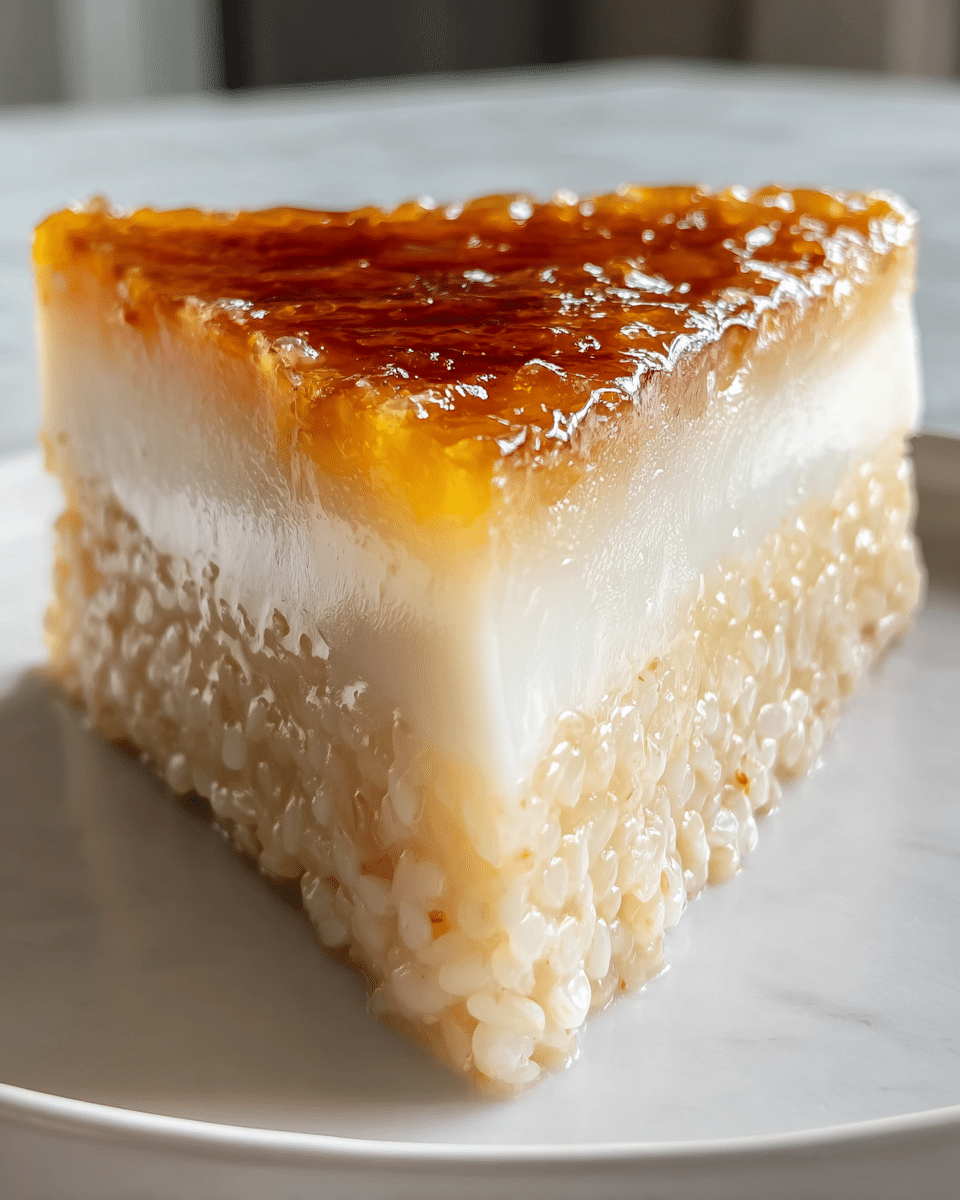
This Heavenly Thai Coconut Custard is a delicate and creamy dessert that combines the rich flavors of coconut milk and palm sugar with the unique aroma of pandan leaves. Served over sticky rice, it offers a delightful texture and irresistible taste you’ll crave again and again.
Ingredients
- 4 large eggs
- 1 cup coconut milk
- 3/4 cup palm sugar
- 1/4 teaspoon salt
- 1 teaspoon vanilla extract
- 2 leaves pandan
- 1 cup sticky rice
Instructions
- Step 1: Preheat your oven to 350°F (175°C) and prepare your baking dish.
- Step 2: In a mixing bowl, gently beat the eggs until well combined and slightly frothy.
- Step 3: Add coconut milk, palm sugar, salt, and vanilla extract to the beaten eggs and whisk thoroughly.
- Step 4: Strain the mixture through a fine sieve into another bowl to ensure a smooth custard.
- Step 5: If using sticky rice, lay it evenly in the baking dish over the pandan leaves.
- Step 6: Pour the custard mixture evenly over the sticky rice layer or directly into the baking dish if not using rice.
- Step 7: Place the baking dish into a larger pan and fill the larger pan halfway with hot water to create a water bath.
- Step 8: Bake for 45 minutes to 1 hour, checking for a set but slightly jiggly center.
- Step 9: Let the custard cool to room temperature, then refrigerate for at least 2 hours if you prefer a firmer texture.
- Step 10: Slice into squares or wedges and serve with optional toppings as desired.
Tips & Variations
- Use fresh pandan leaves if possible for a more fragrant aroma, or substitute with a few drops of pandan extract.
- Try substituting palm sugar with brown sugar, though the flavor will be less caramel-like.
- Serve with fresh mango or toasted coconut flakes for added texture and taste.
- Ensure the water bath is hot but not boiling to prevent the custard from cracking.
Storage
Store the custard covered in the refrigerator for up to 3 days. It tastes best chilled and can be gently reheated in a warm water bath or served cold. Avoid microwaving to maintain the smooth texture.
How to Serve
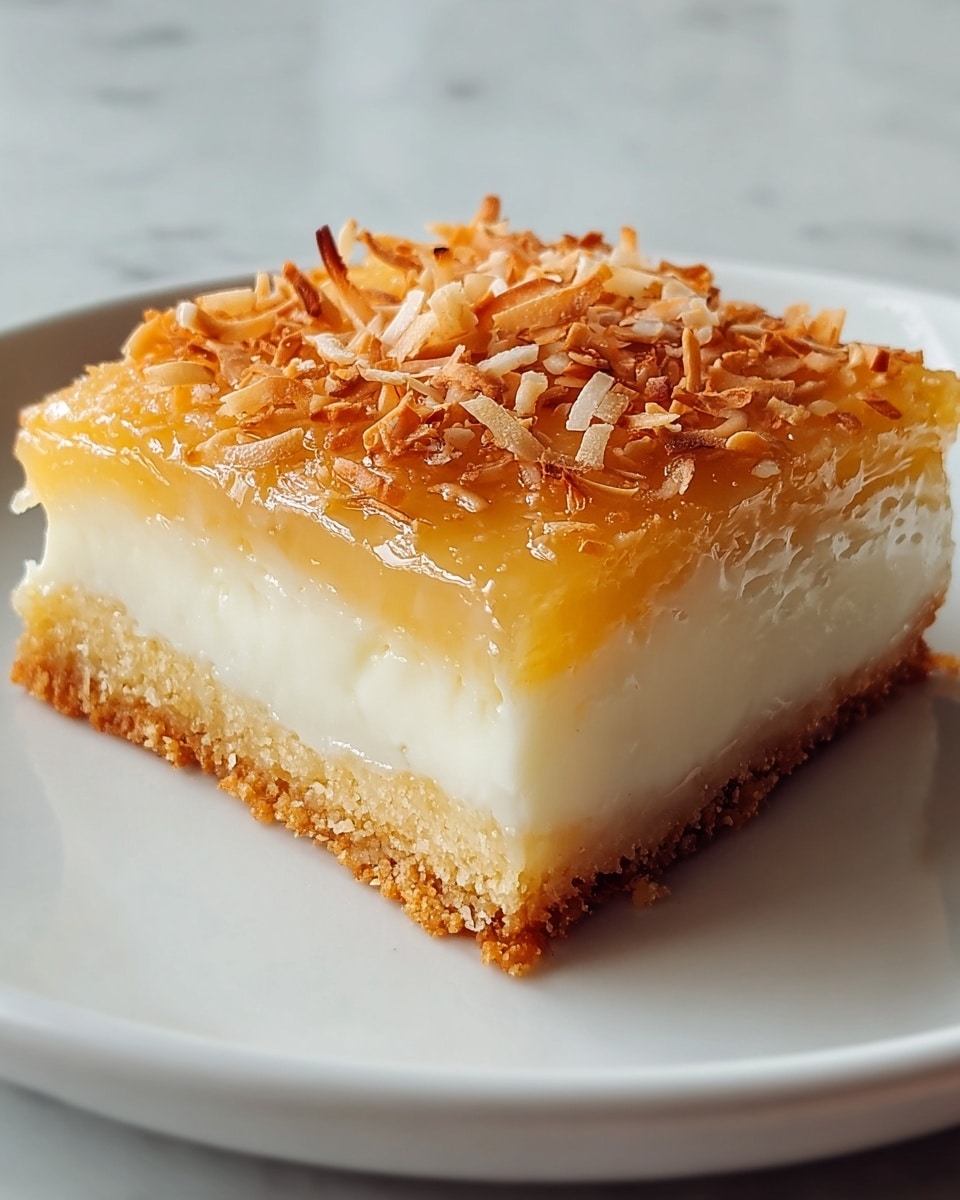
Serve this delicious recipe with your favorite sides.
FAQs
Can I make this custard without sticky rice?
Yes, the custard can be baked alone without sticky rice for a simpler dessert. The rice layer adds texture, but the custard itself is delicious on its own.
What if I don’t have palm sugar?
You can substitute palm sugar with light brown sugar or coconut sugar, but expect a slightly different flavor profile, as palm sugar has a unique caramel-like taste.
PrintHeavenly Thai Coconut Custard with Sticky Rice and Pandan Recipe
Heavenly Thai Coconut Custard is a rich and creamy dessert combining smooth coconut-flavored custard with subtly sweet palm sugar and aromatic pandan leaves. Nestled atop a layer of sticky rice, this baked custard presents a delightful balance of textures and flavors, perfect for those craving an authentic Thai treat with caramel-like sweetness and tropical notes.
- Prep Time: 15 minutes
- Cook Time: 1 hour
- Total Time: 3 hours 15 minutes
- Yield: 6 servings 1x
- Category: Dessert
- Method: Baking
- Cuisine: Thai
- Diet: Gluten Free
Ingredients
Custard Mixture
- 4 large eggs
- 1 cup coconut milk
- 3/4 cup palm sugar
- 1/4 teaspoon salt
- 1 teaspoon vanilla extract
- 2 pandan leaves
Base Layer
- 1 cup sticky rice
Instructions
- Preheat the oven: Set your oven to 350°F (175°C) and prepare a baking dish suitable for a water bath.
- Beat the eggs: In a mixing bowl, gently beat 4 large eggs until combined and slightly frothy, ensuring an even custard texture.
- Mix custard ingredients: Add 1 cup coconut milk, 3/4 cup palm sugar, 1/4 teaspoon salt, and 1 teaspoon vanilla extract to the beaten eggs. Whisk thoroughly to dissolve sugar and blend flavors.
- Strain the mixture: Pour the custard mixture through a fine sieve into another bowl to remove any lumps and ensure smoothness.
- Prepare the base: Lay 1 cup of sticky rice evenly in the baking dish over the 2 pandan leaves, which will infuse aromatic notes during baking.
- Combine layers: Gently pour the strained custard mixture evenly over the sticky rice layer in the baking dish.
- Set up water bath: Place the baking dish inside a larger pan and fill the outer pan halfway with hot water to create a gentle baking environment.
- Bake the custard: Bake for 45 minutes up to 1 hour, monitoring for a set but slightly jiggly center which indicates perfect doneness.
- Cool the dessert: Allow the custard to cool to room temperature, then refrigerate for at least 2 hours to achieve a firmer texture before serving.
- Serve: Slice into squares or wedges and enjoy as is or with your choice of toppings for added indulgence.
Notes
- Pandan leaves add a unique fragrant aroma but can be omitted if unavailable.
- Using palm sugar provides an authentic caramel-like flavor; brown sugar is a possible substitute but will alter taste.
- The water bath method helps cook the custard evenly and prevents cracking.
- Refrigeration improves custard firmness, making slicing easier.
- Sticky rice layer adds texture contrast but can be skipped for a pure custard experience.
Keywords: Thai coconut custard, pandan, sticky rice, palm sugar dessert, baked custard, Thai dessert recipe